
New digital tools are slowly entering the costume workshop, but as yet how they are adopted and their impact is little understood
The production of stage costumes relies on the talents and expertise of diverse costume professionals. These practitioners employ a range of tools and technologies as they collaboratively work to convert an idea or 2D sketch into a 3D garment custom-made for that character and show. Industry 4.0 manufacturing technologies, such as virtual patternmaking and 3D printing, offer substantial productivity, financial, sustainability and creativity benefits to costume construction, but the adoption of such technologies is haphazard and obstructed by a perception that costume practice is not technically innovative. This perception is informed by systematic gender biases that limit investment in, and recognition of, the skills and creativity of costume professionals, who are predominantly female.
Technological Innovations in Costume Practice (TICP) is a research justice project that investigates the integration of technological innovations with the aim of facilitating their adoption and application in the work of costume makers. Instigated by Dr Madeline Taylor, the project was funded by the European Union, via a Marie Skłodowska-Curie Postdoctoral Fellowship.
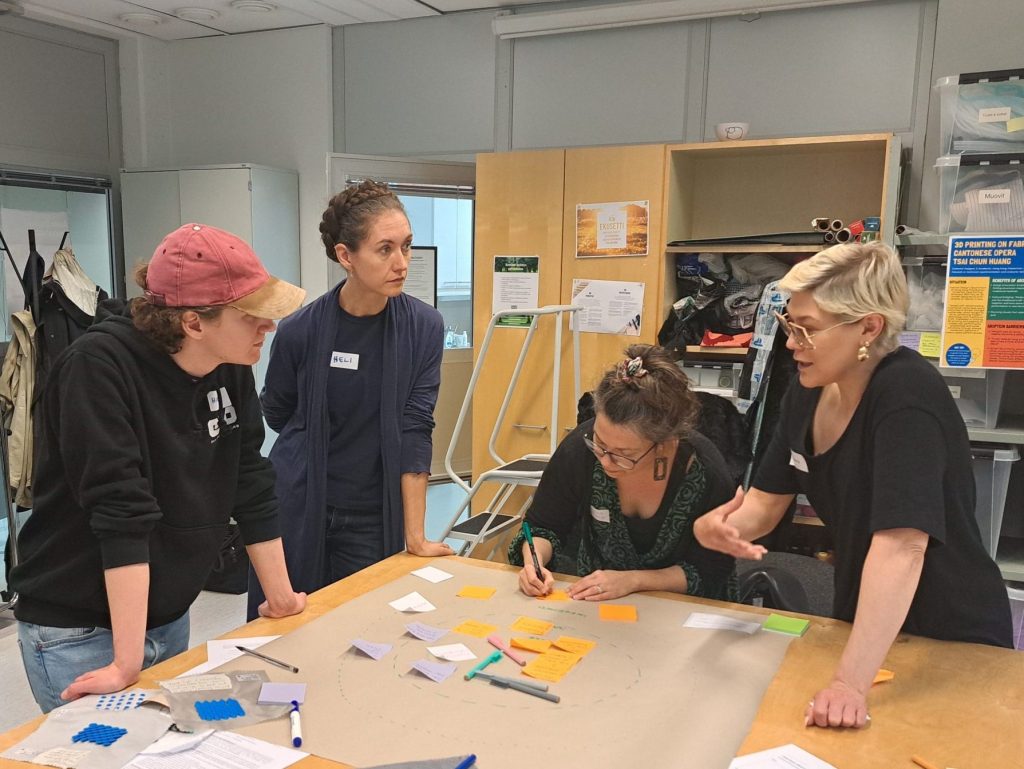
The project sought to elevate the field of costume production and strengthen the future employability of professional costumers through investigation of the adoption and impact of such new digital tools. The project’s central research question was:
As costume practitioners implement new manufacturing technologies in their work, what are the structural and attitudinal factors that constrain and facilitate their adoption?
Through a groundbreaking cross-disciplinary approach appling theories of sociotechnical change to practitioner interviews and digital ethnography, the project developed a model of technological adoption for costume for the very specific context of the live performance industry. This model enables practitioners to be more deliberate, effective and empowered when engaging with new manufacturing technologies. Via codesign workshops with practitioners these findings were then used to develop industry resources and materials (available below). The project results centre the feminised area of costume at the cutting edge of a currently very male-gendered technical production research discourse.
Toolkit
Your digital toolbox for costume work. A resource for evaluating and adopting digital tools in costume practice
Suggested resources
Recommendations for software and learning resources that are helpful for theatre makers. Links can change quickly so this list might not be current